

Businesses and organizations are increasingly using learning management software to deliver, manage and track digital learning and training programs from a centralized platform.
Instead of managing training materials, learners, assessments and reporting across different systems, a modern learning management system (LMS) can bring these activities together into one structured digital learning environment.
For organizations managing employee training, professional development, compliance programs or large-scale learning initiatives, choosing the right LMS software can make training easier to manage and measure.
What Is Learning Management Software?
Learning management software is a digital platform designed to help organizations create, manage, deliver and monitor learning and training programs.
A typical LMS learning system can provide a centralized environment where administrators can manage learners, courses, learning content, assessments and performance information.
Depending on the organization’s requirements, an LMS platform can be used for:
- Employee training
- Corporate learning
- Professional development
- Online courses
- Skills development
- Training management
- Learner progress tracking
- Learning analytics
- Digital learning programs
For larger organizations, an enterprise learning management solution can also support structured learning programs across different teams, departments and locations.
Why Do Businesses Need Learning Management Software?

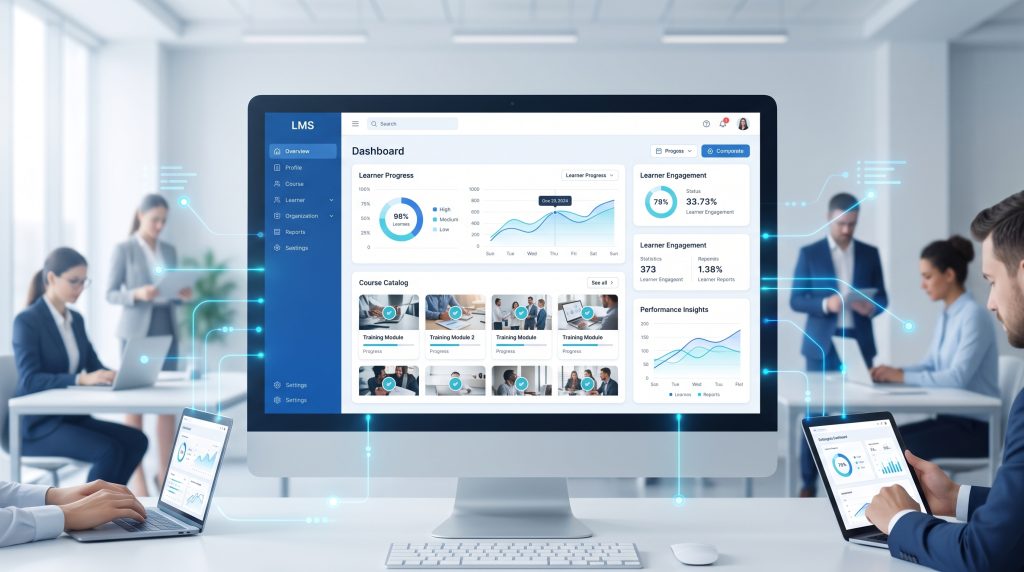
Traditional training processes can become difficult to manage as an organization grows.
Training teams may have to manage spreadsheets, documents, presentations, attendance records and learner performance separately. This can make it difficult to maintain consistency and accurately measure learning outcomes.
A centralized learning management system can help organizations organize these activities within one platform.
1. Centralized Learning Management
Instead of keeping training information across different systems, businesses can manage their learning programs through a centralized LMS platform.
This can make it easier for administrators to organize:
- Learners
- Courses
- Training content
- Assessments
- Learning activities
- Progress information
- Reports
2. Digital Learning Delivery
Modern organizations can deliver learning content digitally, allowing learners to access training through an online environment.
This can be particularly useful for organizations with distributed teams, remote employees or learners located in different regions.
3. Learner Progress Tracking
A learning management system can provide organizations with visibility into learner activity and progress.
Administrators can use available learning data to understand how learners are progressing through training programs and identify areas that may require additional attention.
4. Training Analytics and Reporting
Learning analytics can help organizations understand how their training programs are performing.
Depending on the LMS implementation, organizations may be able to analyze information such as:
- Course participation
- Learner progress
- Assessment performance
- Training activity
- Completion data
This allows training teams to make more informed decisions about their learning programs.
Key Features of Learning Management Software
The features required from an LMS platform depend on the organization’s objectives, learner base and training model.
However, a modern learning management system commonly includes several important capabilities.
Course and Content Management
An LMS should provide a structured environment for managing digital learning content.
Organizations can organize learning materials into courses, modules and training programs so learners can follow a defined learning path.
Learner Management
Organizations may need to manage different learner groups based on departments, teams, roles or other organizational requirements.
A centralized LMS can make learner administration more structured and manageable.
Assessments and Learning Activities
Training programs often require assessments or activities to measure learner understanding.
An LMS learning system can provide an environment for delivering and tracking these learning activities.
Learning Analytics
Data generated through learning activities can help organizations understand learner engagement and training performance.
This is particularly important for businesses that want their training programs to be measurable rather than simply providing content.
Reporting
Reporting capabilities can help administrators monitor learning activity and generate useful insights from their training data.
For larger organizations, reporting becomes especially important when multiple teams or training programs are being managed.
Learning Management Software vs. Traditional Training
The main difference between traditional training and a digital learning management system is the level of centralization and visibility.
| Traditional Training | Learning Management Software |
|---|---|
| Information may be distributed across different systems | Centralized learning environment |
| Manual progress tracking | Digital progress tracking |
| Limited reporting | Learning analytics and reporting |
| Physical or disconnected training resources | Digital learning content |
| Difficult to scale across large teams | Designed to support scalable learning programs |
The right approach depends on the organization’s requirements, but businesses managing growing training programs can benefit from having a structured digital learning environment.
How to Choose the Right LMS Platform
Choosing an LMS should not be based only on the number of features available.
Organizations should first understand their learning objectives and then evaluate whether the platform can support those requirements.
Consider Your Learner Requirements
Start by identifying who will use the platform.
For example:
- Employees
- Customers
- Students
- Corporate learners
- Training participants
The learner profile can influence the type of LMS platform required.
Evaluate Scalability
An LMS should be capable of supporting the organization’s expected growth.
A platform that works for a small training program may not necessarily be suitable for an enterprise environment with larger learner volumes and more complex training structures.
Consider Analytics and Reporting
If training performance needs to be measured, analytics and reporting should be an important part of the evaluation process.
Evaluate Integration Requirements
Organizations may need their learning management software to work alongside other business systems.
Before implementation, it is important to understand the organization’s existing technology environment and integration requirements.
Enterprise Learning Management
Large organizations often have more complex training requirements than smaller teams.
An enterprise learning management environment may need to support different departments, learner groups, training programs and reporting requirements.
Enterprise LMS implementations can be used to create structured digital learning environments for organizations that need greater control over their training ecosystem.
For businesses evaluating enterprise-level requirements, the focus should be on:
- Scalability
- Centralized administration
- Learning analytics
- Content management
- Learner management
- Reporting
- Integration capabilities
The objective should be to create a learning environment that supports the organization’s long-term training strategy rather than simply selecting software with a large feature list.
Custom Learning Management Solutions
Every organization does not necessarily have the same learning requirements.
Some businesses may require a more customized LMS solution based on their existing processes, learners, content structure and technology environment.
A custom learning management solution can be designed around specific organizational requirements instead of forcing the organization to completely change its existing learning processes.
LearnTech Global provides enterprise learning management systems, custom eLearning development, corporate training, cloud hosting and learning analytics solutions.
What Makes a Modern LMS Effective?
A successful LMS implementation is not only about installing software.
The platform should support the organization’s overall learning strategy.
A strong LMS environment should make it easier to:
- Organize learning content
- Manage learners
- Deliver digital training
- Monitor progress
- Analyze learning activity
- Generate useful reports
- Scale training programs
The technology should ultimately support better learning management and operational efficiency.
Final Thoughts
Learning management software has become an important technology for organizations looking to manage digital learning and training through a centralized environment.
From learner management and content delivery to analytics and reporting, an LMS learning system can help organizations create a more structured approach to training.
For organizations with larger or more specialized requirements, an enterprise learning management solution can provide a scalable foundation for managing digital learning programs.
The right LMS should therefore be selected based on the organization’s learners, training objectives, scalability requirements, technology environment and long-term learning strategy.